
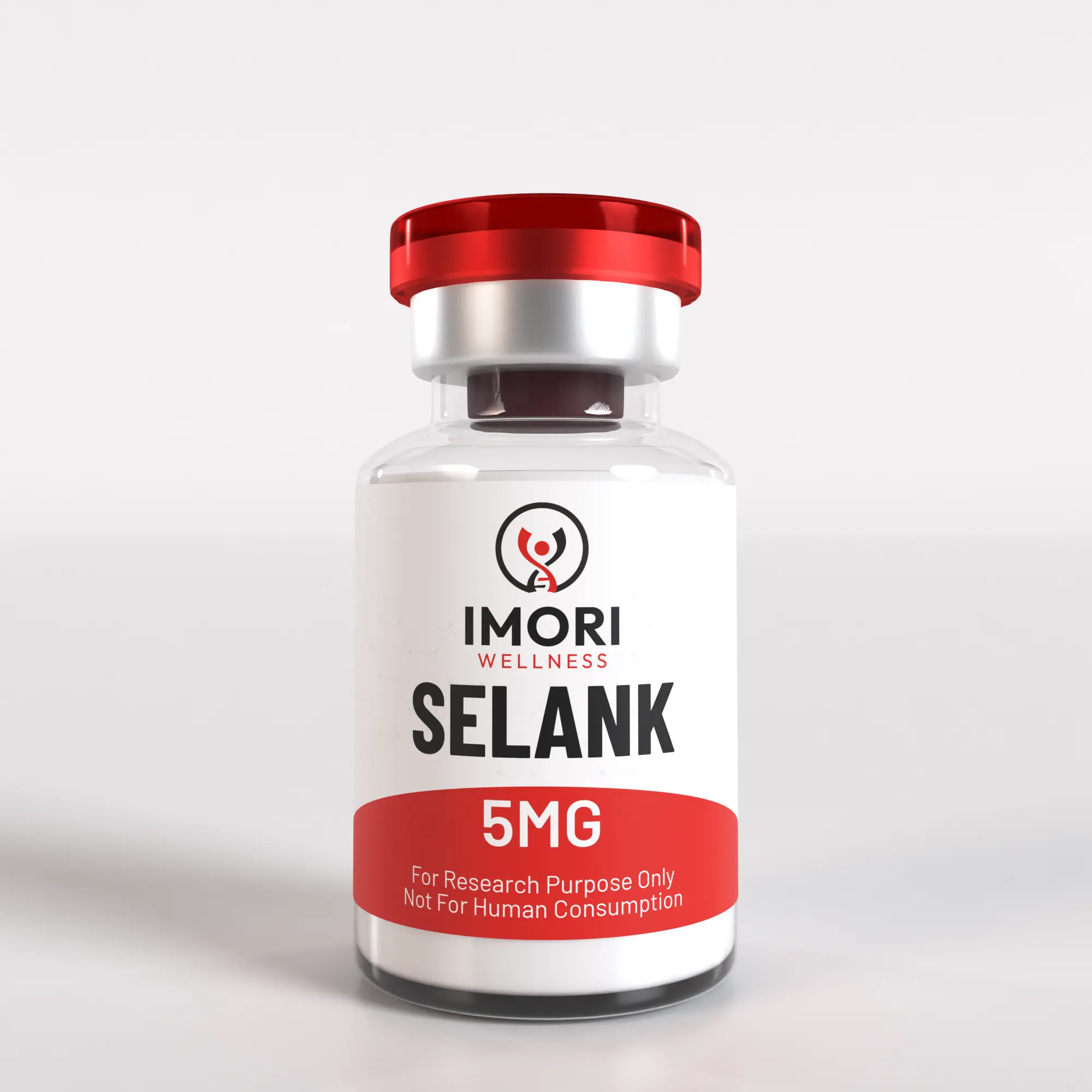

SELANK
SELANK is a synthetic peptide designed for advanced research applications in the field of biochemistry, pharmacology, and cellular biology. Derived from the structure of certain endogenous peptides, SELANK holds potential utility in studying protein interactions, receptor binding mechanisms, and cellular signaling pathways. Due to its specific sequence, SELANK may be utilized in experimental settings to explore novel mechanisms of action in controlled laboratory environments.
Research Context
Peptides like SELANK are increasingly employed in research to investigate molecular interactions that influence cellular functions. These compounds can serve as tools for probing binding affinities, structural conformations, and functional dynamics of proteins and receptors. The synthetic nature of SELANK allows for precise modifications and experimentation without the variability associated with endogenous sources. Such peptides are widely utilized in preclinical studies to understand fundamental biochemical processes, which may ultimately inform therapeutic strategies in future research.
Research Overview
SELANK is synthesized to mimic structural motifs found in signaling peptides, offering researchers a reproducible and standardized reagent for investigations involving protein-protein interactions, enzyme substrates, or receptor-mediated pathways. Its application typically lies in in vitro systems, such as cell culture assays, ELISA-based binding studies, or molecular docking simulations. By providing a defined sequence, SELANK enables the exploration of ligand-receptor specificity, competitive inhibition, or conformational changes induced by peptide binding.
Key Research Focus Areas
- Protein Receptor Interaction Studies: Investigation of SELANK’s affinity for specific receptors or enzyme substrates to elucidate mechanisms of cellular signaling.
- In Vitro Binding Assays: Utilization in ELISA or SPR (Surface Plasmon Resonance) assays to quantify binding kinetics and equilibrium constants.
- Structural Biology: Application in molecular docking or NMR spectroscopy to analyze conformational changes or binding site specificity.
- Signal Transduction Pathways: Examination of SELANK’s role in modulating intracellular responses, particularly in controlled experimental conditions.
- Preclinical Modeling: Exploration of peptide-mediated effects in cell-based assays for toxicology, pharmacokinetics, or functional genomics research.
Safety and Compliance Considerations
SELANK is provided strictly for research purposes and is not intended for therapeutic, diagnostic, or cosmetic applications. Researchers must adhere to regulatory guidelines for handling peptides in compliance with local and national laws governing biochemical substances. Handling SELANK should be conducted in a fume hood or well-ventilated environment to mitigate potential exposure risks. Proper storage at recommended temperatures (e.g., -20°C or -80°C) is essential to maintain peptide integrity.
For research use only. Not for human or animal consumption.


Reviews
There are no reviews yet.