
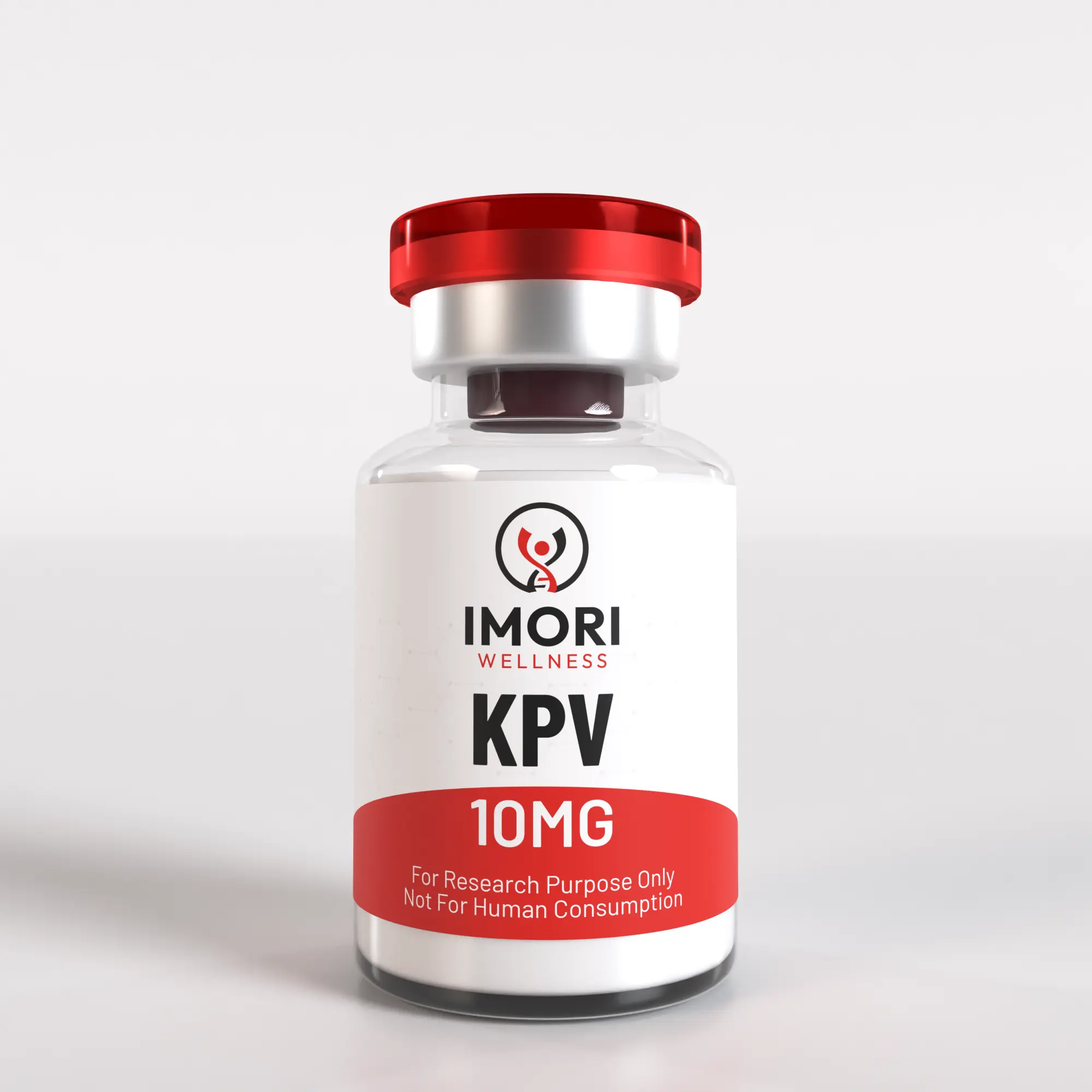

KPV 10MG
KPV (Lys-Pro-Valine) is a synthetic trimer peptide under investigation in academic and pharmaceutical research for its potential biological interactions within cellular and extracellular environments. This peptide is distinct from other KPV analogs and is presented here for research purposes only.
KPV has been explored in preclinical and basic research settings, particularly for its role in modulating protein-protein interactions, immune system signaling pathways, and potential neuroprotective or regenerative effects. Due to its structural simplicity, KPV holds significance in studies examining peptide stability, uptake mechanisms, and metabolic processing.
Research Overview
Research involving KPV primarily focuses on its physicochemical properties, such as solubility, bioavailability, and potential interactions with cellular receptors or extracellular matrix components. It serves as a tool to investigate mechanisms of peptide delivery, peptide-protein binding affinities, and functional roles in biological systems.
Key Research Focus Areas
- Peptide Stability and Metabolism: Investigation into degradation pathways, half-life, and modifications (e.g., conjugation with carrier molecules) to enhance stability.
- Biological Uptake and Delivery: Study of cellular uptake mechanisms, including endocytosis, passive diffusion, or receptor-mediated endocytosis, relevant to peptide-based drug delivery systems.
- Protein-Protein Interactions: Analysis of KPV’s potential to modulate interactions within signaling cascades, such as those involving cytokines, growth factors, or extracellular matrix proteins.
- Neuroprotective or Regenerative Mechanisms: Explorations in preclinical models, such as neuronal cultures or animal studies, to assess its effects on neural repair, synaptic function, or disease modeling (e.g., neurodegenerative or inflammatory conditions).
- Immunomodulation: Examination of its influence on immune cell activity, cytokine production, or inflammatory responses within in vitro and in vivo experimental frameworks.
It is important to note that these studies are conducted within controlled academic or research settings, governed by ethical protocols and institutional review boards.
For research use only. Not for human or animal consumption.


Reviews
There are no reviews yet.