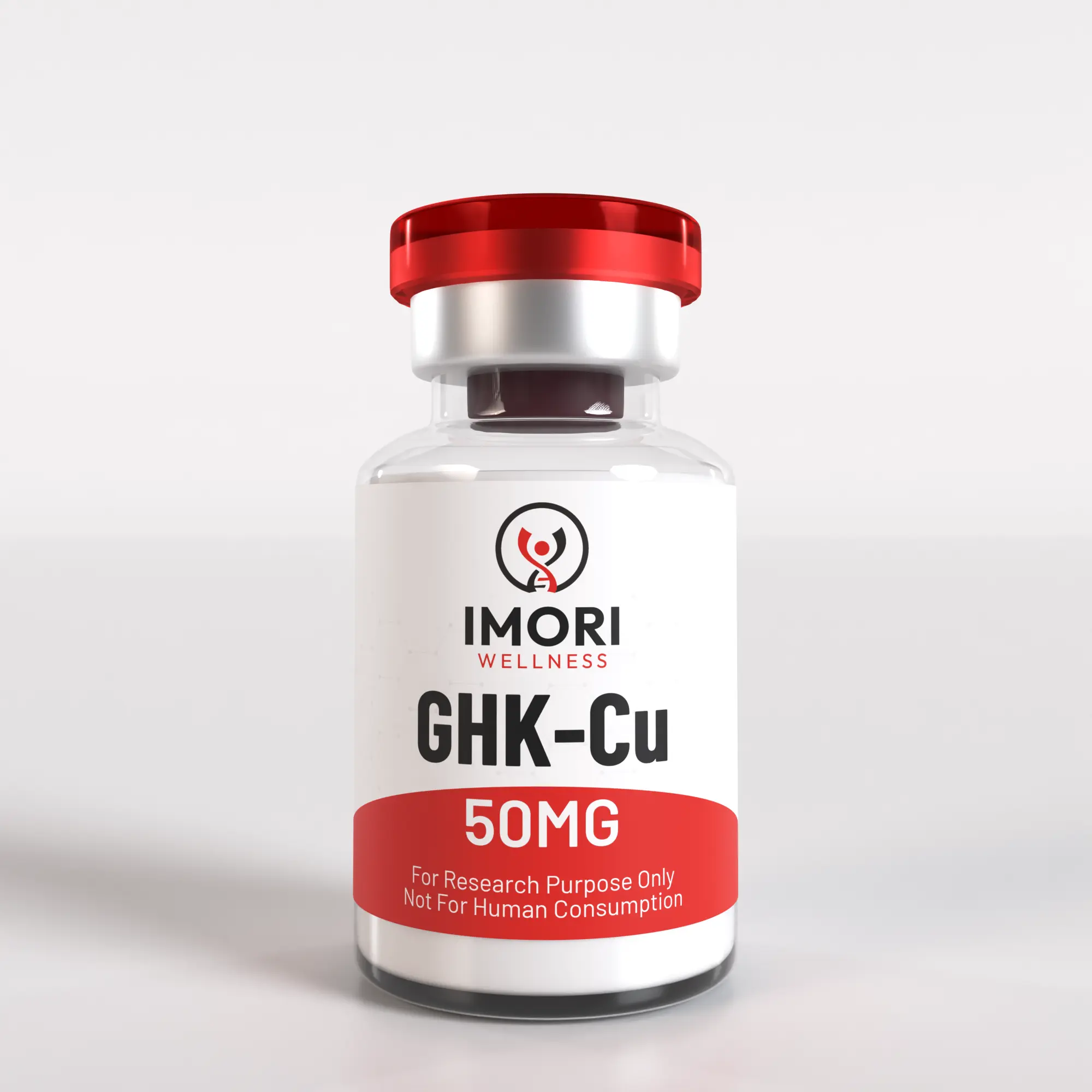

GHK-Cu – Full Kit (10 Vials)

Categories:

GHK-Cu is a research-use-only peptide composed of the tripeptide glutathione (GHK) complexed with copper. It has been studied for its potential role in cellular processes and bioenergetics in laboratory contexts. For research use only.

Price range: $170.99 through $255.99

⚠️ RESEARCH USE ONLY

This product is for R&D purposes only and is not approved for human or veterinary use.

Satisfaction Guaranteed

Secure
Payment

Third-party
Tested

Research Use Disclaimer

Every serious peptide company prominently displays this. Example Research Use Only All products offered by Ascend Biologics are intended strictly for laboratory research purposes. Products are not for human consumption and are not intended for diagnostic, therapeutic, or medical use. By purchasing from our website, customers confirm they are qualified researchers or laboratories and understand the intended research-use designation.

GHK-Cu

GHK-Cu, or Glycyl-L-Histidyl-L-Lysine-Copper, is a copper-peptide complex studied for its potential biological interactions in research settings. This compound has garnered significant attention in scientific literature for its proposed roles in cellular signaling, wound healing, and tissue regeneration, though its mechanisms remain subject to ongoing investigation.

Research Context

GHK-Cu was originally discovered in the 1990s through studies of copper peptide interactions with cellular membranes and extracellular matrix components. Over the years, research has explored its effects at the molecular level, particularly its capacity to modulate protein interactions and signal transduction pathways. While its applications in biomedical research are extensive, its potential therapeutic uses in humans or animals remain strictly under investigation and not yet approved for clinical use.

Research Overview

GHK-Cu is frequently studied for its influence on fibroblast activity, a cell type critical to collagen synthesis and tissue repair. Early investigations suggested potential benefits in wound healing models, particularly in promoting extracellular matrix remodeling. Subsequent studies have expanded into areas such as neuroprotection, inflammatory response modulation, and even cancer research, though findings vary and are often context-dependent. The compound’s stability, bioavailability, and tissue distribution are key parameters in research efforts to clarify its role in biological systems.

Key Research Focus Areas

  • Wound Healing and Tissue Repair: GHK-Cu has been examined in pre-clinical studies for its effects on accelerating wound closure and improving scar formation in various models, including dermal injuries and burns. Its ability to enhance fibroblast proliferation and extracellular matrix deposition is a primary area of investigation.
  • Cellular Signaling and Protein Interactions: Research focuses on GHK-Cu’s interactions with copper-binding proteins, such as metallothioneeins, and its modulation of signaling pathways involved in cell growth, apoptosis, and oxidative stress responses.
  • Neuroprotective Mechanisms: Emerging studies explore GHK-Cu’s potential neuroprotective properties, particularly in models of neurodegeneration, stroke, or traumatic brain injury, though results are preliminary and require further validation.
  • Anti-Inflammatory and Immune Modulation: In vitro and in vivo research has investigated GHK-Cu’s influence on inflammatory cytokine production and immune cell activity, including its effects on macrophage polarization and tissue homeostasis.
  • Cancer Biology and Tumor Suppression: While controversial, some studies have suggested potential anti-tumor effects in specific cancer models, primarily through modulation of tumor microenvironment dynamics. However, these findings remain speculative and are not universally accepted.

It is important to note that all research involving GHK-Cu is conducted under strict regulatory oversight and adheres to established ethical guidelines. This product is intended solely for academic, industrial, or institutional research purposes and is not designed for therapeutic, diagnostic, or cosmetic applications.

Safety and Compliance

GHK-Cu is a highly purified synthetic compound prepared under Good Laboratory Practice (GLP) standards to ensure consistency and reliability for research applications. However, researchers must exercise caution when handling the compound, as exposure to copper peptides can involve potential biological hazards, including allergic responses or localized irritation in some experimental settings. Always follow institutional protocols for safe handling and disposal of research materials.

For research use only. Not for human or animal consumption.
Lorem ipsum dolor sit amet, consectetur adipiscing elit. Ut elit tellus, luctus nec ullamcorper mattis, pulvinar dapibus leo.

At Hollywood Peptides, we provide more than just industry-leading compounds; we provide the certainty and excellence required for groundbreaking results. We recognize that in the world of science, there is no room for error. That is why every formulation we offer is subjected to stringent validation and certification protocols.
 
Lab Report
Date Added :
04/07/2026

GHK-Cu

GHK-Cu, or Glycyl-L-Histidyl-L-Lysine-Copper, is a copper-peptide complex studied for its potential biological interactions in research settings. This compound has garnered significant attention in scientific literature for its proposed roles in cellular signaling, wound healing, and tissue regeneration, though its mechanisms remain subject to ongoing investigation.

Research Context

GHK-Cu was originally discovered in the 1990s through studies of copper peptide interactions with cellular membranes and extracellular matrix components. Over the years, research has explored its effects at the molecular level, particularly its capacity to modulate protein interactions and signal transduction pathways. While its applications in biomedical research are extensive, its potential therapeutic uses in humans or animals remain strictly under investigation and not yet approved for clinical use.

Research Overview

GHK-Cu is frequently studied for its influence on fibroblast activity, a cell type critical to collagen synthesis and tissue repair. Early investigations suggested potential benefits in wound healing models, particularly in promoting extracellular matrix remodeling. Subsequent studies have expanded into areas such as neuroprotection, inflammatory response modulation, and even cancer research, though findings vary and are often context-dependent. The compound’s stability, bioavailability, and tissue distribution are key parameters in research efforts to clarify its role in biological systems.

Key Research Focus Areas

  • Wound Healing and Tissue Repair: GHK-Cu has been examined in pre-clinical studies for its effects on accelerating wound closure and improving scar formation in various models, including dermal injuries and burns. Its ability to enhance fibroblast proliferation and extracellular matrix deposition is a primary area of investigation.
  • Cellular Signaling and Protein Interactions: Research focuses on GHK-Cu’s interactions with copper-binding proteins, such as metallothioneeins, and its modulation of signaling pathways involved in cell growth, apoptosis, and oxidative stress responses.
  • Neuroprotective Mechanisms: Emerging studies explore GHK-Cu’s potential neuroprotective properties, particularly in models of neurodegeneration, stroke, or traumatic brain injury, though results are preliminary and require further validation.
  • Anti-Inflammatory and Immune Modulation: In vitro and in vivo research has investigated GHK-Cu’s influence on inflammatory cytokine production and immune cell activity, including its effects on macrophage polarization and tissue homeostasis.
  • Cancer Biology and Tumor Suppression: While controversial, some studies have suggested potential anti-tumor effects in specific cancer models, primarily through modulation of tumor microenvironment dynamics. However, these findings remain speculative and are not universally accepted.

It is important to note that all research involving GHK-Cu is conducted under strict regulatory oversight and adheres to established ethical guidelines. This product is intended solely for academic, industrial, or institutional research purposes and is not designed for therapeutic, diagnostic, or cosmetic applications.

Safety and Compliance

GHK-Cu is a highly purified synthetic compound prepared under Good Laboratory Practice (GLP) standards to ensure consistency and reliability for research applications. However, researchers must exercise caution when handling the compound, as exposure to copper peptides can involve potential biological hazards, including allergic responses or localized irritation in some experimental settings. Always follow institutional protocols for safe handling and disposal of research materials.

For research use only. Not for human or animal consumption.
Kit

50 MG Full Kit (10 Vials), 100 MG Full Kit (10 Vials)

Reviews

There are no reviews yet.

Be the first to review “GHK-Cu – Full Kit (10 Vials)”

Your email address will not be published. Required fields are marked *

Related Peptides

0
    Cart
    Your cart is emptyReturn to Shop
    Age Verification!

    *By continuing, you confirm eligibility and legal compliance.